GREAT VIBES MIND
Asmai Hamo
Restored Minds Akilicare Kenya and The Standard Media Group
Chebet Birir Saina
She Fights Cancer Foundation
Dr. Anisa Mburu

Women in STEAM Initiative
Caroline Nyaga is the Founder of Women in STEAM Initiative, an organisation dedicated to empowering girls and young women in Kenya with STEM and digital skills, while creating pathways to future-ready careers.
Caroline’s passion for this work grew from her experience teaching Chemistry and Biology in schools across Kenya and visiting schools where she saw firsthand how limited exposure shaped girls’ perceptions of STEM. She recalls meeting a bright girl who believed that “STEM is for boys” simply because she had never seen a woman working in science or technology. That moment strengthened Caroline’s commitment to creating opportunities where girls could experience STEM, meet role models and begin to see themselves as future scientists, technologists and innovators.
Through Women in STEAM Initiative, Caroline leads hands-on STEM clubs, coding and robotics workshops, digital literacy training, mentorship programmes and STEM storytelling competitions. The initiative works closely with schools, particularly in rural and underserved communities, where access to technology and STEM opportunities can be limited.
One of Caroline’s proudest experiences has been leading STEM bootcamps in Chogoria and Chuka, bringing robotics, coding and digital tools to girls who had never interacted with such technology. During one bootcamp, she met a Form 2 student who had never used a laptop and believed STEM was only for gifted students. With Caroline’s guidance, the girl learned basic coding and robotics, eventually creating her own Scratch programme and using Arduino to light an LED. She later joined the mentorship programme and became a Community Champion, helping inspire other girls in her school.
To date, Women in STEAM Initiative has partnered with seven schools across Kenya and directly impacted approximately 1,500 girls through STEM clubs, bootcamps, competitions and mentorship. The initiative has also trained 145 students through its holiday STEM bootcamps, with more than 70% successfully completing their first coding, robotics or digital literacy projects.
Caroline is passionate about creating a future where geography, gender or lack of exposure does not determine who gets to participate in STEM. Her vision is to empower one million girls and young women across Kenya over the next decade, while expanding STEM clubs, developing young female STEM ambassadors and strengthening partnerships that make hands-on STEM education accessible nationwide.
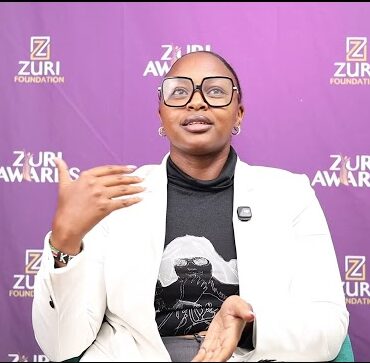
Beyond The Flow- Flowing Wisdom project
Liz Njeri Kamau is the Founder of Flowing Wisdom, a menstrual equity initiative working to ensure that girls and women can manage menstruation with dignity, confidence and access to the right knowledge and resources.
Her journey began while serving as a teacher leader at Kwa Njenga Primary School, where she noticed that many girls were regularly missing school because of their periods. Some could not afford menstrual products, while others relied on unsafe alternatives or stayed home because of pain, embarrassment and stigma. Together with a colleague, Liz started a small school club where girls could openly discuss menstruation, access basic information and find a safe space for support. That small initiative became the foundation of Flowing Wisdom.
Today, Liz leads efforts that combine menstrual health education, access to sustainable menstrual products, improved school hygiene facilities and youth-led advocacy. Through Flowing Wisdom, more than 2,500 learners have been reached with menstrual health education, over 2,000 reusable menstrual products have been distributed, and more than 10 menstrual health ambassadors have been trained to support and educate their peers.
A key part of Liz’s approach is ensuring that the work creates lasting change. Flowing Wisdom is establishing school clubs and peer mentorship programmes, while working towards pad dispensers and hygiene stations that can provide girls with reliable access to emergency menstrual products.
For Liz, the impact goes beyond numbers. One of the stories closest to her heart is that of Diela, a learner she first encountered in 2023. Once shy and frequently absent from school during her periods, Diela grew in confidence through menstrual health education and peer support. She eventually became a menstrual health ambassador and went on to take on student leadership roles, including serving as Speaker of the Student Council at Kwa Njenga and the Embakasi South Sub-County Student Council.
Liz’s vision is to see menstrual equity become a reality for every girl in Kenya. Over the next decade, she hopes to reach at least 50,000 young people, expand Flowing Wisdom across all 47 counties, establish clubs in 1,000 schools, install more than 5,000 pad dispensers and hygiene stations, and train 1,000 menstrual health ambassadors.
Through Flowing Wisdom, Liz is building more than a menstrual health programme. She is helping create a future where no girl has to miss school, lose confidence or limit her opportunities because of her period.
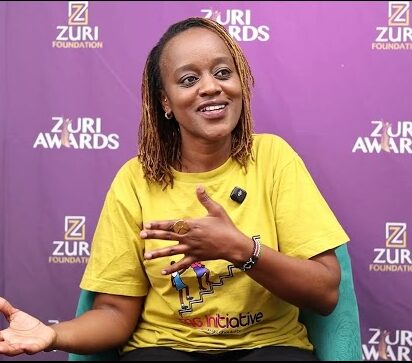
The Ambitious Girl Initiative Community Based Organization (TAG-I CBO)
Lucy Murrey is a passionate public health practitioner and advocate for adolescent girls and young women in rural Kenya. She is the founder of The Ambitious Girl Initiative (TAG-I CBO), an organisation working to ensure that no girl’s future is limited by lack of information, access to menstrual products, or harmful cultural taboos.
Her journey began during the COVID-19 pandemic, when school closures left many girls vulnerable to teenage pregnancy, sexual exploitation, and early marriage. One experience touched her deeply: a neighbour’s 13-year-old daughter became pregnant. It was a painful reminder that many girls, especially in rural communities, lacked access to accurate information about their bodies, their health, and their rights.
Drawing from her background in public health, Lucy took action.
Through TAG-I CBO, she creates safe spaces where adolescent girls and young women can learn openly about sexual and reproductive health and rights, menstrual hygiene, and the choices that can help them stay in school and take control of their futures. Her work reaches both school-going and out-of-school girls, challenging myths and misconceptions around sexuality in communities where such conversations are often considered taboo.
Over the last four years, TAG-I CBO has reached more than 4,000 adolescent girls and young women, empowering them with knowledge, support, and practical tools to navigate adolescence with confidence and dignity.
Recognising that menstrual poverty continues to keep many girls out of school, Lucy also established TAGI Pads, a social enterprise producing affordable, reusable sanitary pads that can last for up to two years. The initiative creates a sustainable model where revenue from pad sales supports TAG-I’s community programmes, while a portion of the pads is donated to girls who cannot afford menstrual products.
For Lucy, a sanitary pad is more than a basic necessity. It can mean the difference between attending school and staying at home; between vulnerability and protection; between giving up and continuing to dream.
Looking ahead, she envisions expanding TAG-I’s work across Kenya and beyond, while growing TAGI Pads into a sustainable enterprise capable of reaching girls far beyond the communities where the journey began.
Lucy Murrey is helping girls stay informed, stay in school, and believe that their circumstances should never define the size of their dreams.
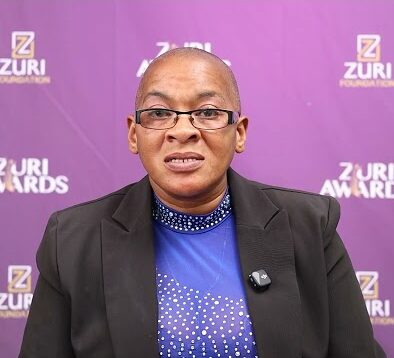
Protect a girl image organization
Margaret Wangui Ruthari is a passionate grassroots leader, advocate, and changemaker dedicated to giving vulnerable girls and young mothers a second chance at education, dignity, and a better future.
As the Founder of Protect a Girl Image (PGI), a community-based organization in Kangai, Kenya, Margaret works at the intersection of girls’ education, child protection, adolescent motherhood, psychosocial support, and community empowerment. Her work is driven by a simple but powerful belief: “When you educate a girl, you secure the future.”
Through PGI, Margaret has helped rescue and reintegrate more than 300 girls affected by early marriage, abuse, teenage pregnancy, and school dropout. She has also supported adolescent mothers to return to school, acquire vocational skills, rebuild their confidence, and pursue dignified livelihoods.
One story that captures Margaret’s impact is that of Mwitha, a 15-year-old girl who had lost both parents and was at risk of being married off simply to survive. Under Margaret’s leadership, PGI intervened, supported her return to school, provided psychosocial care and essential educational support, and surrounded her with mentorship and hope. Mwitha went on to complete her secondary education, pursue a Certificate in Community Health, and become a peer mentor helping other vulnerable girls find their way back to education.
For Margaret, every girl rescued represents more than one life changed. It is a family transformed, a cycle of poverty interrupted, and a community given a new possibility.
Her vision extends to 2035: 5,000 vulnerable girls supported to complete their education, 2,000 adolescent mothers and women empowered with skills and economic opportunities, stronger community protection systems, and safer communities where every girl can grow, learn, and thrive.
Margaret Wangui Ruthari is building more than an organization. She is building a future where no girl is left behind.
Nurturing hearts. Restoring dignity. Protecting dreams.
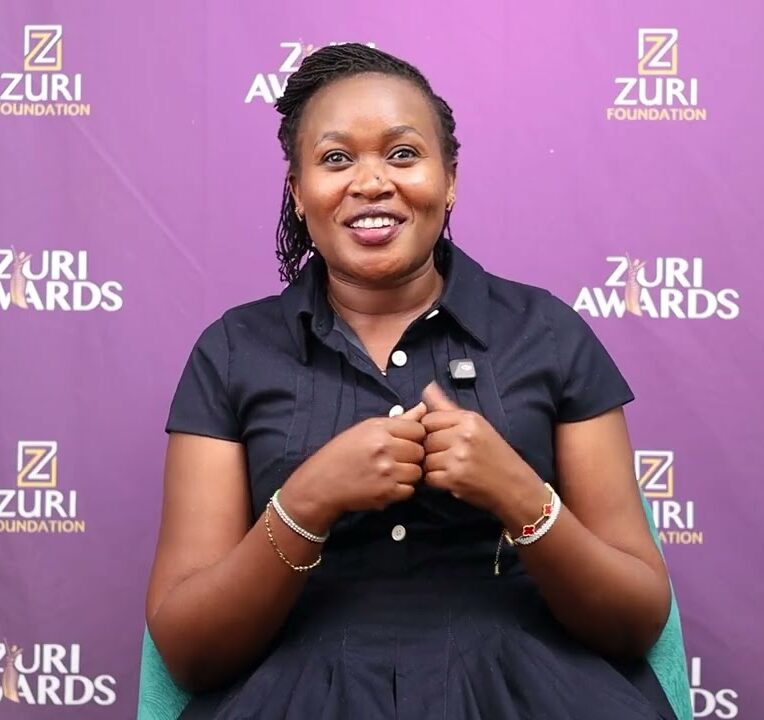
Agromind AI
Karen Cherono is the Co-Founder and CEO of AgroMind AI, an agritech company using technology and artificial intelligence to help smallholder farmers make better decisions and build more resilient livelihoods.
Her journey with AgroMind AI started from a very personal experience. In 2021, while in her home area of Bomet County, Karen witnessed farmers lose entire maize harvests to Maize Lethal Necrosis Disease. What struck her most was that many farmers did not have access to the right information at the right time. Some even replanted maize on infected land the following season, unknowingly exposing themselves to the same losses.
Coming from an ICT background, Karen began thinking about how technology could help close this information gap. This became the motivation behind AgroMind AI — a platform designed to put practical agricultural advice directly in the hands of farmers through their phones.
Today, AgroMind AI supports farmers across different stages of the farming journey, from planting and crop management to identifying pests and diseases, managing climate-related challenges, handling produce after harvest and finding useful market information.
Karen’s ambition goes beyond building a technology platform. She wants to see African farmers, particularly women and young people, have better access to knowledge, finance, markets and opportunities. Her vision is to reach 1 million farmers across East Africa, train 10,000 women as agri-entrepreneurs and Village Champions, establish 500 Village Bank-in-a-Box nodes, and expand school gardens to 500 schools.
At the heart of Karen’s work is a simple belief: farmers should not have to lose everything simply because they did not have the right information at the right time.
Through AgroMind AI, she is working to make agricultural knowledge more accessible, practical and relevant — while combining technology with local knowledge and climate-smart farming to create a stronger and more sustainable future for farming communities.
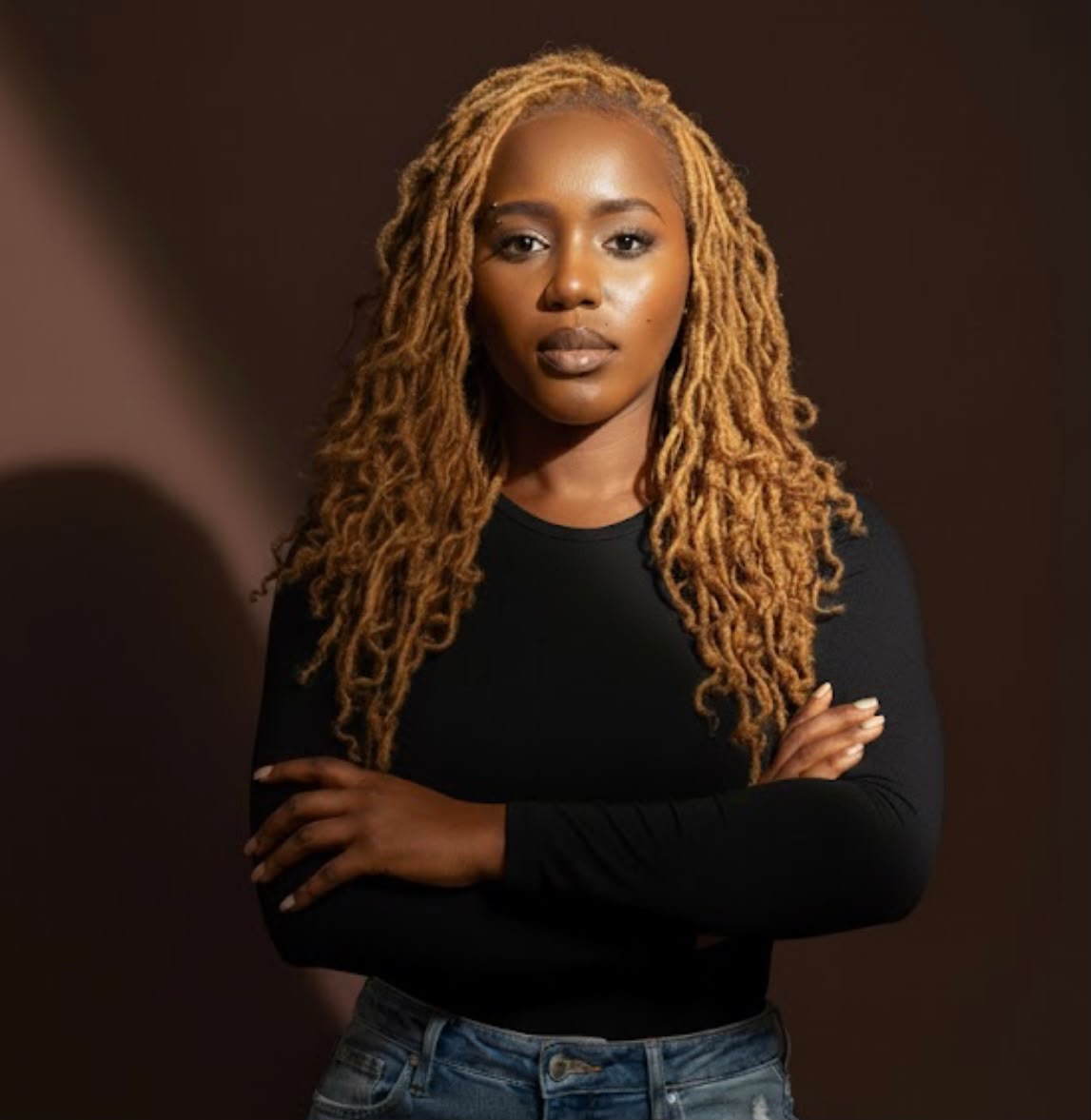
Project Red lipstick (Make Femicide A Crime)
Wera Apondi is a strategic communications and influence leader passionate about using the power of creativity, culture and communications to drive meaningful social change.
As Head of Influence, Sub-Saharan Africa at WPP Scangroup, Wera works at the intersection of brands, people and culture, championing ideas that have the power to shape conversations and inspire action beyond traditional advertising.
Her belief in the responsibility of the creative industry to speak up on issues that matter is reflected in her role in Project Red Lipstick – Make Femicide a Crime, a purpose-led initiative by WPP Scangroup in partnership with Usikimye and Joanna K Cosmetics.
The campaign takes a bold stand against the normalisation and systemic treatment of femicide as simply another homicide. It seeks to drive public awareness, challenge complacency and advocate for the formal recognition of femicide as a distinct crime in Kenya—because naming the crime is an important step towards accountability, justice and protecting women.
Through Project Red Lipstick, Wera represents a growing movement of creative and industry leaders using their influence not only to tell stories, but to challenge the status quo, amplify important voices and turn public attention into meaningful action.

NAFISIKA TRUST - Organisation SMART DADA Prison Program
Rose Wambui Thuku is the Executive Director of Nafisika Trust, a for-impact, charity-based organisation focused on reducing recidivism and supporting the successful rehabilitation, reintegration and economic empowerment of incarcerated individuals, particularly young people.
Rose has served as Executive Director since 2021, taking over the leadership of Nafisika Trust from its Founder, Vickie Wambura. Under her leadership, Rose has continued to strengthen the organisation’s partnership with the Kenya Prisons Service, where Nafisika Trust has worked for 19 years to deliver rehabilitation, reintegration, capacity-building and empowerment programmes across correctional institutions in Kenya.
A key focus of Rose’s leadership has been expanding access to rehabilitation and skills development programmes through technology. She spearheaded the introduction and expansion of Virtual Prison Training Programmes, enabling Nafisika Trust to reach institutions that are located in marginalised and remote areas of the country.
Rose plays a central role in the organisation’s strategic direction, overseeing the drafting, implementation, monitoring, evaluation and measurement of its Strategic Plan. She was instrumental in the development and execution of the organisation’s 2020–2022 Strategic Plan and is currently leading the development of Nafisika Trust’s 2026–2030 Strategic Plan.
During and following the COVID-19 period, Rose led the organisation in significantly expanding its geographical reach—from activities in fewer than five counties to more than 10 counties across Kenya. This growth has enabled Nafisika Trust to broaden its rehabilitation, reintegration, capacity-building and economic empowerment programmes, reaching hundreds of men, women and young people.
Under her leadership, Nafisika Trust has also strengthened its digital engagement and institutional reach. The organisation has provided technology support to at least five correctional institutions, delivered virtual training to more than 10 institutions, and engaged approximately 90 prisons through the MAKINI Awards Webinar Series, helping to sensitise, mobilise and encourage greater participation in positive change within the correctional service.
Rose is passionate about creating pathways for people leaving prison to rebuild their lives, become economically productive and successfully reintegrate into their communities. Her work is grounded in the belief that rehabilitation, opportunity and empowerment can help transform lives, reduce re-offending and ultimately contribute to safer and more inclusive communities.